
Setting the Search Radius manually
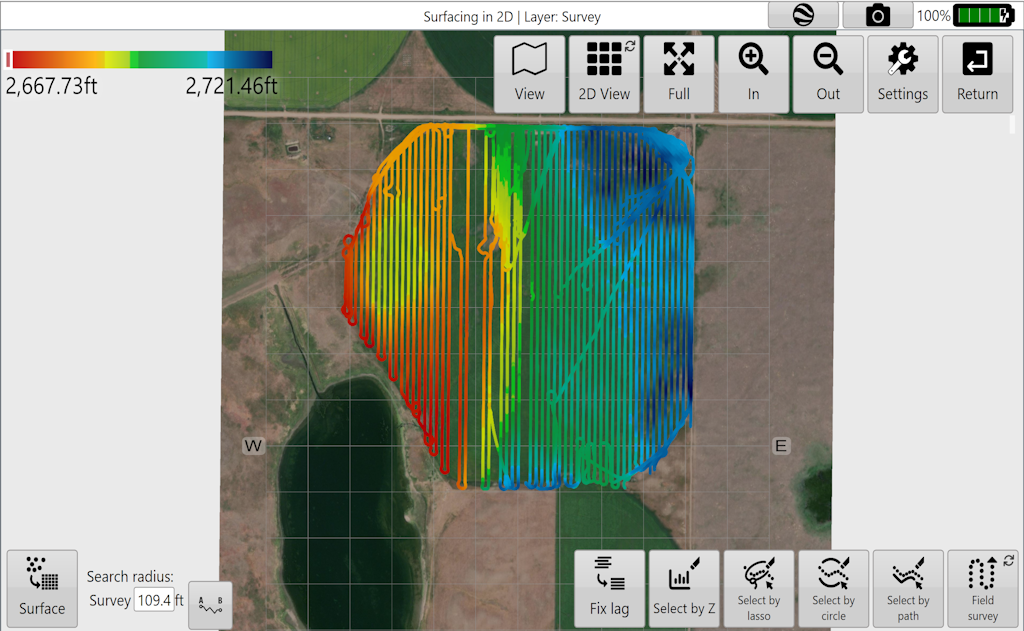
If the automatically generated search radius does not give the expected result, you can adjust it manually in the bottom left corner of the surfacing page. Consider the following when making an adjustment.
What the Search radius means
A Search radius is required to convert discrete elevation points into a continuous surface. At locations that were not directly measured, elevation is estimated from surrounding measured points. The search radius determines how far the surfacing algorithm looks for those points.
Effects of changing the radius
A search radius smaller than required leaves gaps in the surface. A radius larger than required normally has no visible effect on the resulting surface, but surfacing takes longer to complete.
In some cases, surface artifacts bridge sections of the field where you would not expect a surface, such as a pond or the inside corner of an L-shaped field. Choosing a smaller search radius can sometimes remove these areas. Their effect is normally limited, but they can affect your area and dirt volume records.
General sizing guidance
In general, use a search radius of about 2 times the swath width at which the data was collected. This sizing should keep the time needed to apply the surface short while using as much data as possible to generate a representative map.