
3.7 | Cylinder Ratio Calibration
Cylinder Ratio Calibration compensates for differences in implement movement speeds between opposing control directions. Hydraulic systems rarely move at identical speeds in both directions. Differences in cylinder geometry, implement weight, hydraulic flow characteristics, machine design and gravity can all influence the speed at which the implement moves.
For elevation control, the implement may raise more slowly than it lowers due to implement weight and hydraulic loading.
For cross-slope control, left and right tilt movements may also occur at slightly different rates due to cylinder geometry and hydraulic system characteristics.
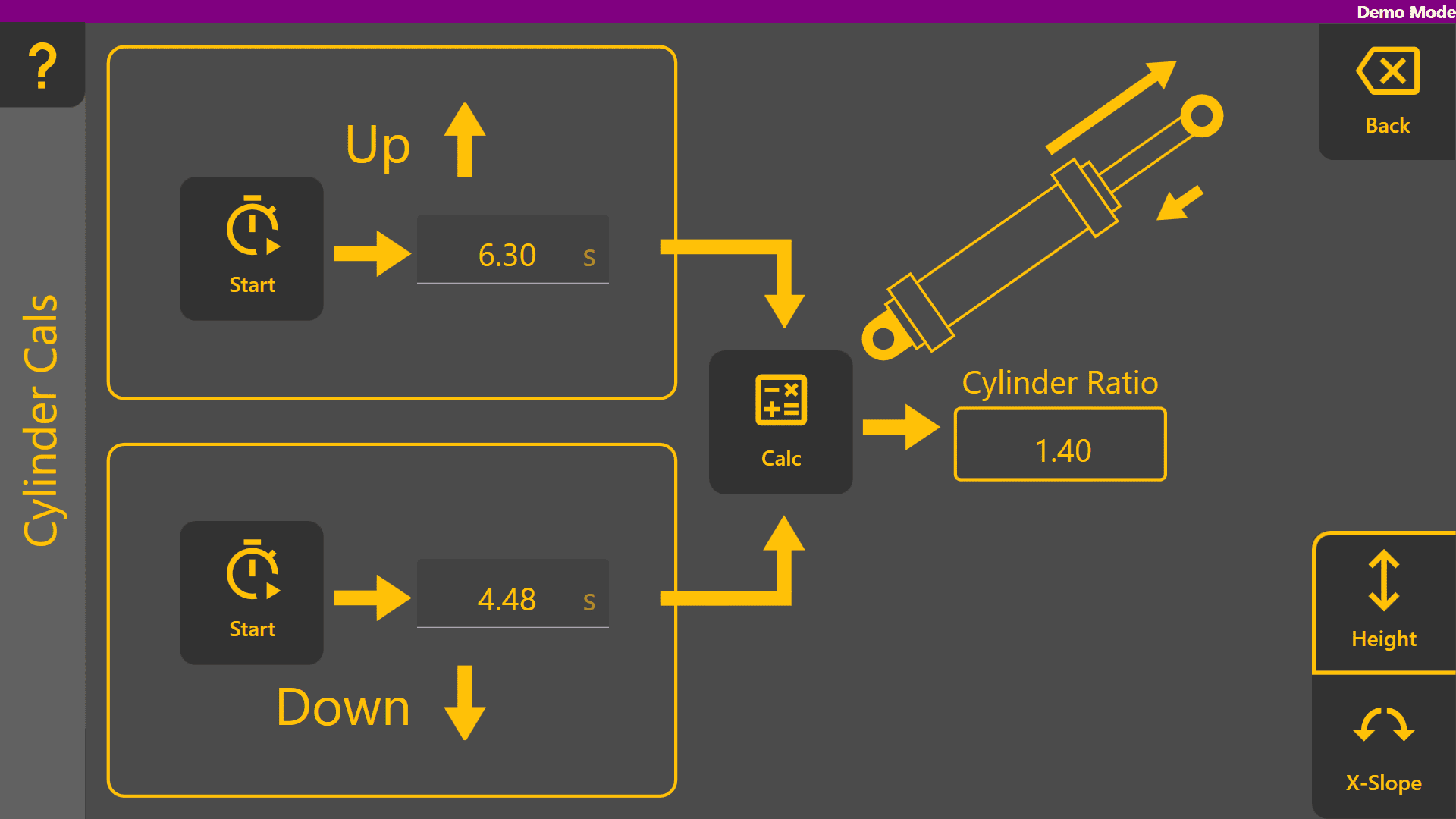
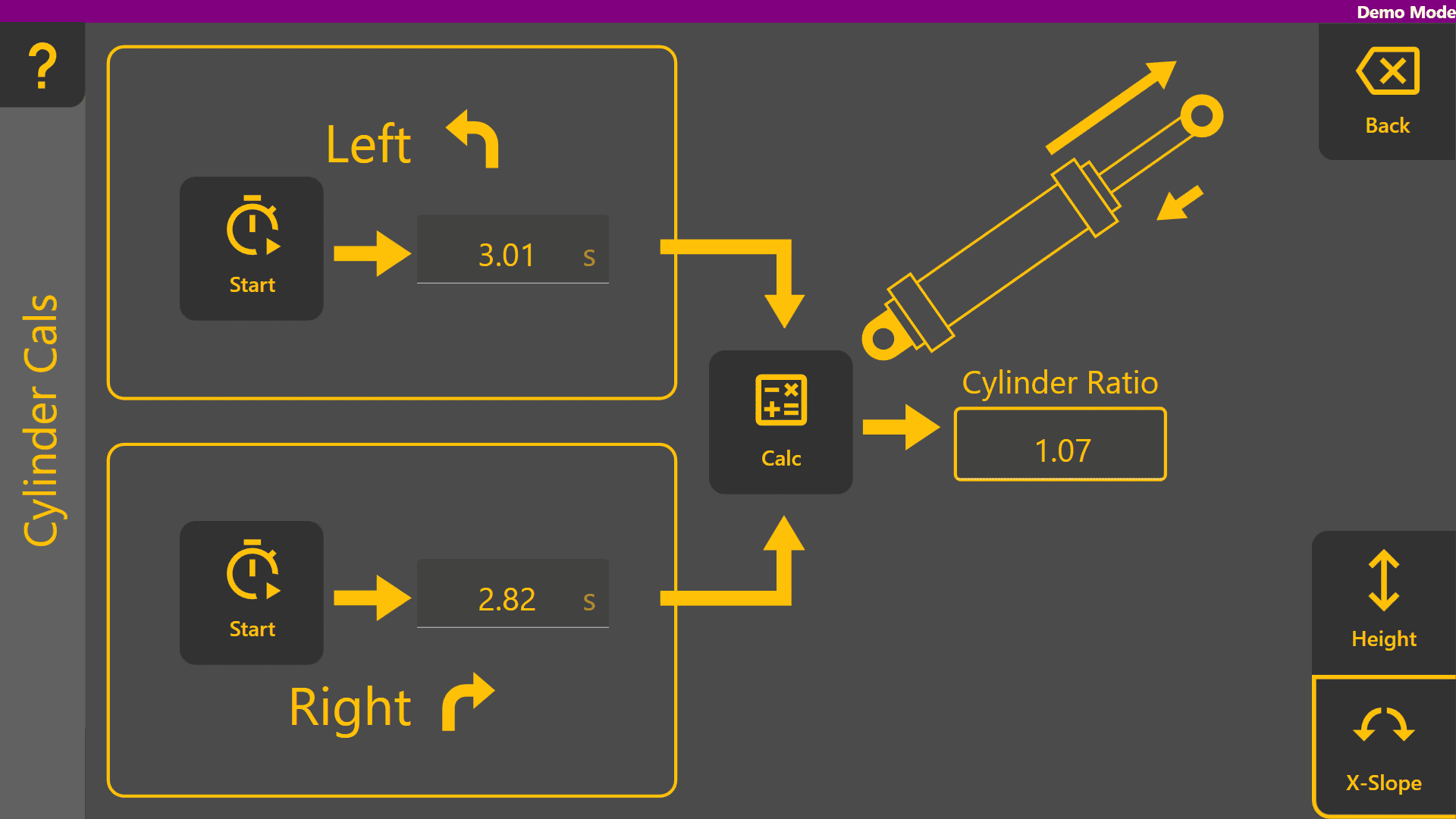
Cylinder Ratio Calibration measures the time taken to move the implement through its full range of motion in each direction and automatically calculates a correction ratio used by Automatic Control.
Calibration Procedure
Elevation (Raise / Lower)
- Position the implement at its lowest operating position.
- Press Start in the Up section.
- Immediately raise the implement at full manual control speed until maximum height is reached.
- Press Stop when maximum height is reached.
- Press Start in the Down section.
- Immediately lower the implement at full manual control speed until minimum height is reached - do not make contact with the ground, stop the implement before it does.
- Press Stop when minimum height is reached.
- Press Calculate Ratio to generate the Elevation Cylinder Ratio.
Cross-Slope (Left / Right)
- Position the implement at one end of its available tilt range.
- Press Start Left or Start Right as appropriate.
- Immediately move the implement at full manual control speed until the opposite end of travel is reached.
- Press Stop when the limit of travel is reached.
- Repeat for the opposite direction.
- Press Calc to generate the Cross-Slope Cylinder Ratio.
Verification
After calibration:
- Implement movements should respond consistently in both directions during Automatic Control.
- Neither direction should appear noticeably slower or more aggressive than the opposite direction.
- If hydraulic components, cylinders, valves or plumbing are modified, cylinder calibration should be repeated.