
COMMAND ISOBUS Requirements
The COMMAND system does not explicitly require the tractor to be fitted with an ISOBUS system; however, we strongly recommend taking the opportunity to upgrade any tractor to be used with COMMAND to be ISOBUS capable as well, thereby future proofing for other future devices at the same time.
What is ISOBUS, Again?
For those still a bit unfamiliar with what ISOBUS is, it's a standardized CANBUS communication protocol that allows tractors, implements, and on-board computers to communicate with each other, regardless of the manufacturer. This system simplifies operations, reduces clutter, and improves efficiency by allowing farmers to control multiple implements from a single interface.
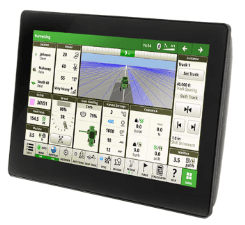
A typical ISOBUS setup will often include an ISOBUS terminal display along with various different ISOBUS harnesses that set up the standardised harnessing and messaging framework on the machine. Other types of ISOBUS compatible devices can then be added for all kind of functionality including auto-steering, automated land levelling, automated planting/seeding/spreading/spraying and more.
ISOBUS GNSS Data
COMMAND may make use of the ISOBUS to read GNSS data of StarFire or NMEA 2000 message format, which will be present and readily available to the COMMAND ECU if both the ECU and the GNSS receiver are connected to the ISOBUS.
ISOBUS Auxiliary Valve Control
COMMAND may also make use of the tractor ISOBUS when performing control of the electrohydraulic valves. Messages are sent to a tractor hydraulic controller over the ISOBUS in some configurations. Usually, if the tractor's hydraulic controller is capable of control via external messages, the machine will already have ISOBUS harnessing and functionality.