6.6 | Automatic Control Tuning
The quality of Automatic Control is determined by several systems working together. Poor grading performance is often caused by multiple small issues rather than a single fault.
Rather than immediately adjusting tuning or calibration values, verify that each stage of the control process is operating correctly.
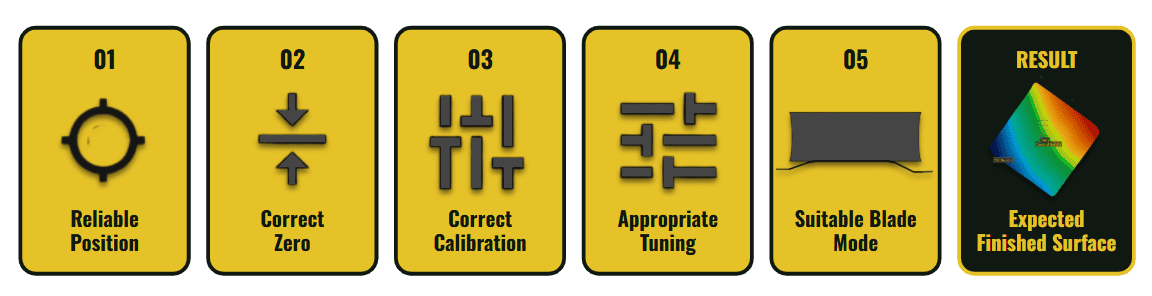
The diagram above shows the recommended order for evaluating Automatic Control performance. Each stage provides the foundation for the next. Problems identified early in the process should be corrected before moving on to later stages.
| Factor | Why It Matters |
|---|---|
| Reliable Position | Accurate GNSS positioning is the foundation of Automatic Control. Poor position data cannot be corrected through tuning or calibration. |
| Correct Zero | Zero aligns the project with the real world. An incorrect Zero causes every calculated Target Position to be offset from the intended Design. |
| Correct Calibration | Correct valve calibration ensures the hydraulic system begins moving at the expected output and reaches full output when required. Incorrect calibration often produces symptoms similar to poor tuning. |
| Appropriate Tuning | Once calibration is correct, Tracking Sensitivity fine-tunes how aggressively the implement responds to changing conditions. Small adjustments are normally sufficient. |
| Suitable Blade Control Mode | Selecting the appropriate Blade Control Mode allows Level COMMAND to interpret the Design in a way that best suits the grading task and terrain. |
| Good Finished Surface | When each stage is functioning correctly, Automatic Control can consistently produce accurate and repeatable grading results. |
Other Influencing Factors
Even when the control system has been configured correctly, external operating conditions can still affect grading performance.
Examples include:
- Machine travel speed.
- Hydraulic flow and pressure.
- Implement size and weight.
- Soil conditions and material consistency.
- Machine wear or hydraulic leakage.
These factors influence how quickly and accurately the implement can respond to hydraulic commands generated by Level COMMAND.
Diagnosing Poor Performance
If grading performance is not meeting expectations, investigate the system in the order shown above.
For example:
- Poor RTK positioning should be corrected before recalibrating the hydraulic system.
- Incorrect Zero should be corrected before adjusting Tracking Sensitivity.
- Valve calibration should be verified before attempting further tuning.
- Blade Control Mode should only be changed once the control system is operating correctly.
Working through the control system in this sequence avoids unnecessary adjustments and makes faults significantly easier to identify.
Operator Tip: Make one adjustment at a time. Changing multiple settings together makes it difficult to determine which change improved—or degraded—control performance. Verify the effect of each adjustment before making the next.
Continue to 6.7 | Predictive Control & Look Ahead to learn how Level COMMAND anticipates machine movement and compensates for hydraulic response delays.