7.3 | CNH Direct Connect (AFS Connect / PLM Intelligence)
Applicable to:
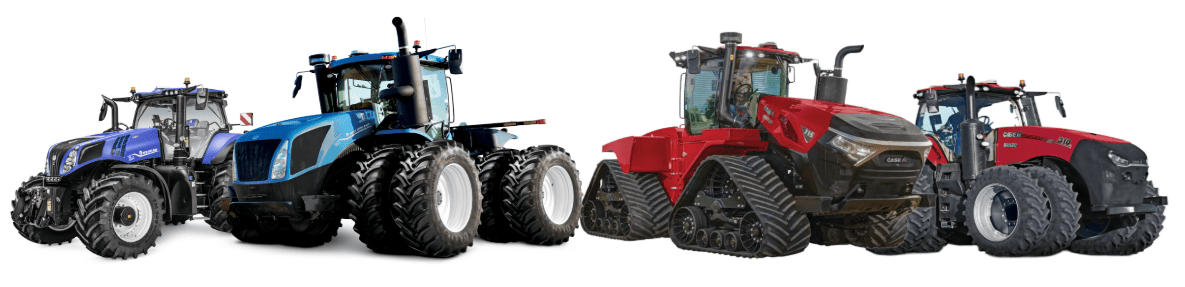
Case IH / New Holland tractors with AFS Connect or PLM Intelligence systems.
Connection Method
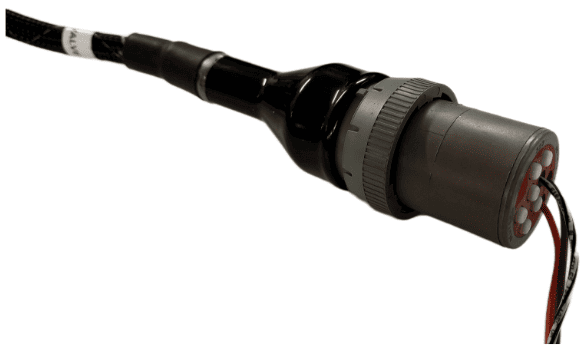
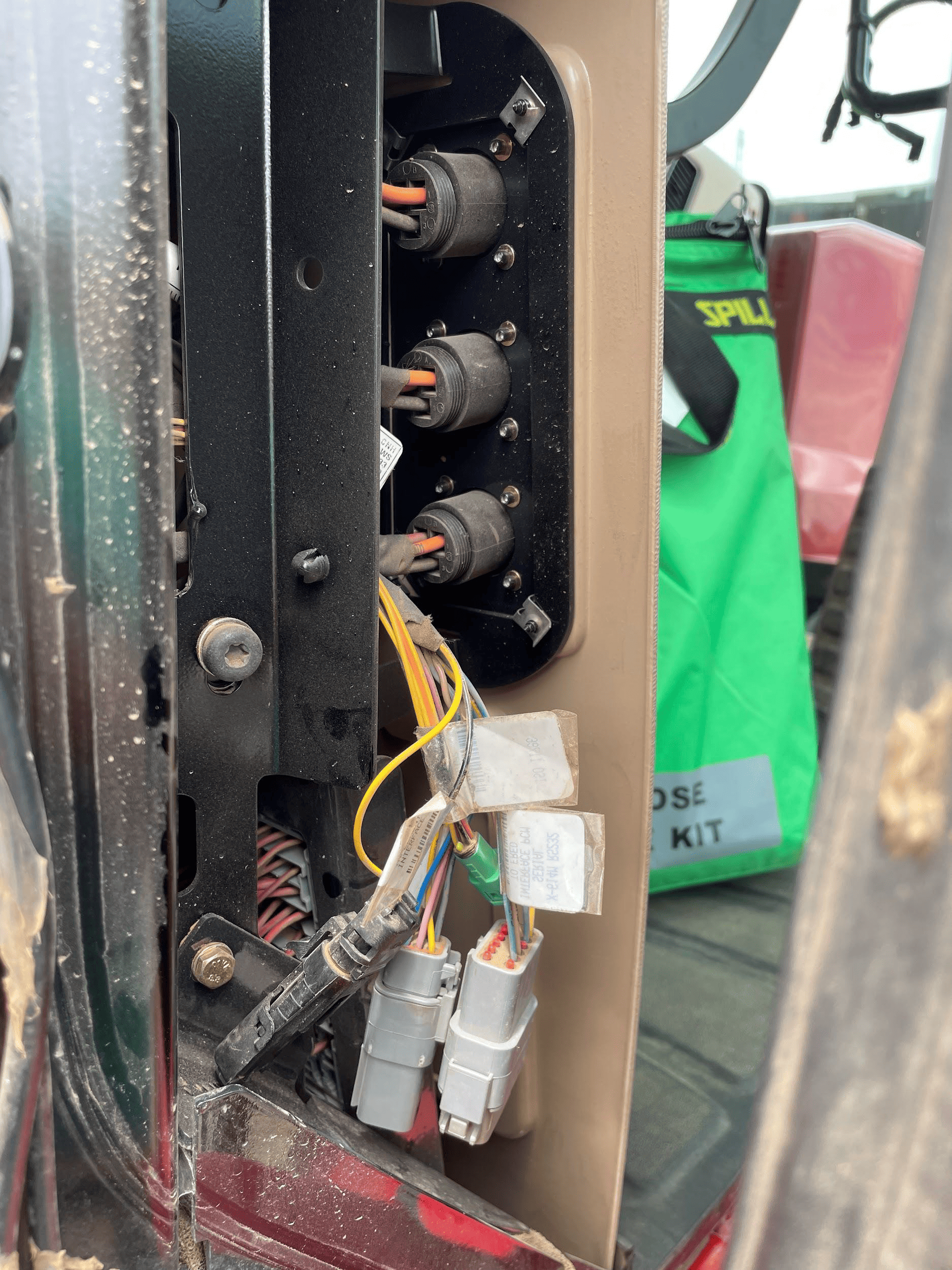 COMMAND can control Case & New Holland rear tractor valve (EHR) systems through the use of a T3H-V001 COMMAND Legacy Output Adapter.
Installation Steps
The Case / New Holland tractor connection for analog control signal inputs via the T3H-V001 adapter are generally found in one of three locations depending on tractor model:
1. Locate the tractor SCV signal input connector:
- Fuse compartment
- Behind driver seat
- Under cab exterior (4WD models)
2. Connect the T3H-V001 adapter to the tractor connection.
3. Connect the T3H-V001 adapter to the T3H-C002 harness.
Tractor Valve Configuration
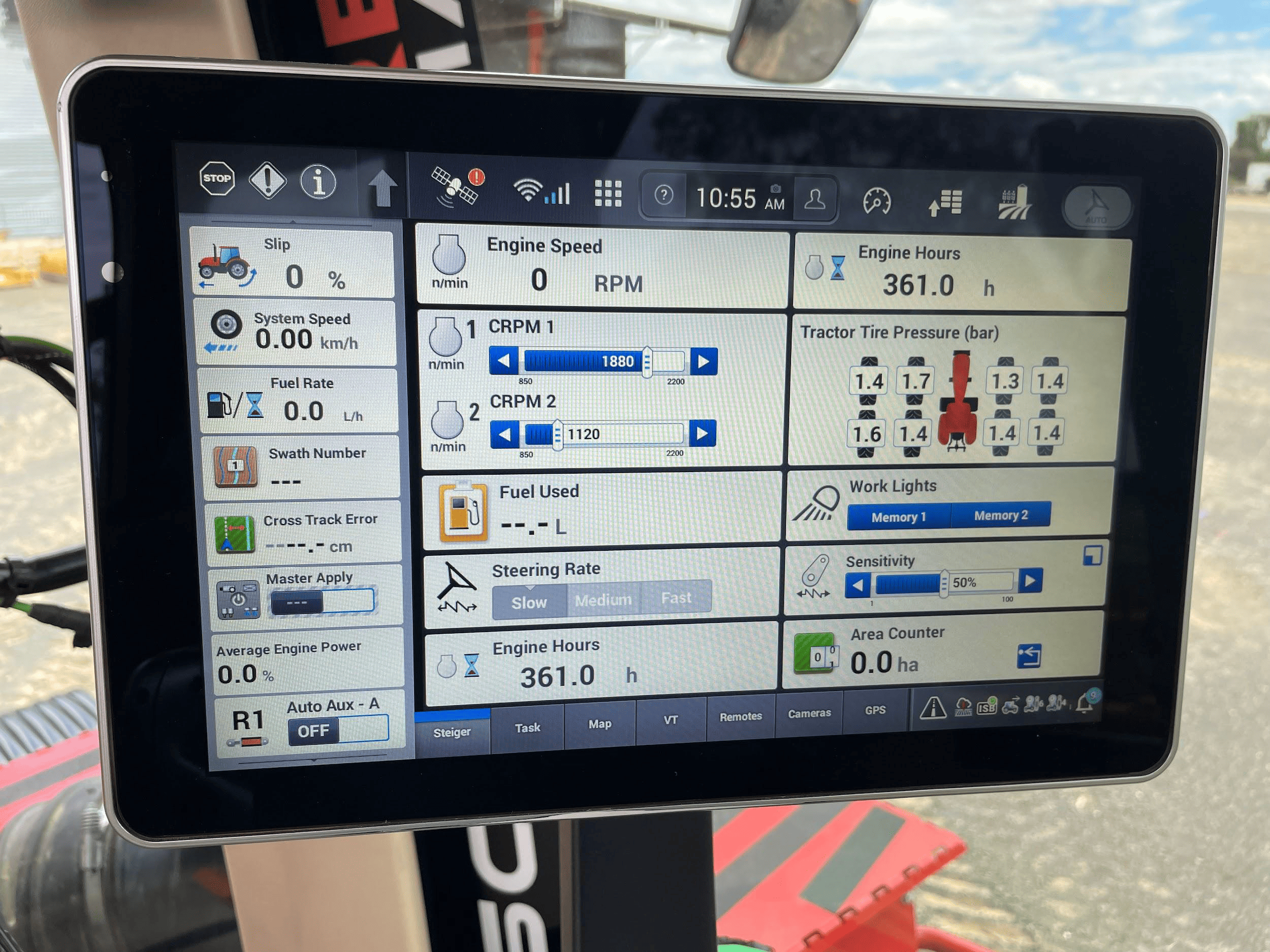
1. After completing the physical connection, the system must be configured on the tractor armrest display.
2. Ensure that a new implement profile has been created for use with the scraper, or that the currently selected profile is
appropriate.
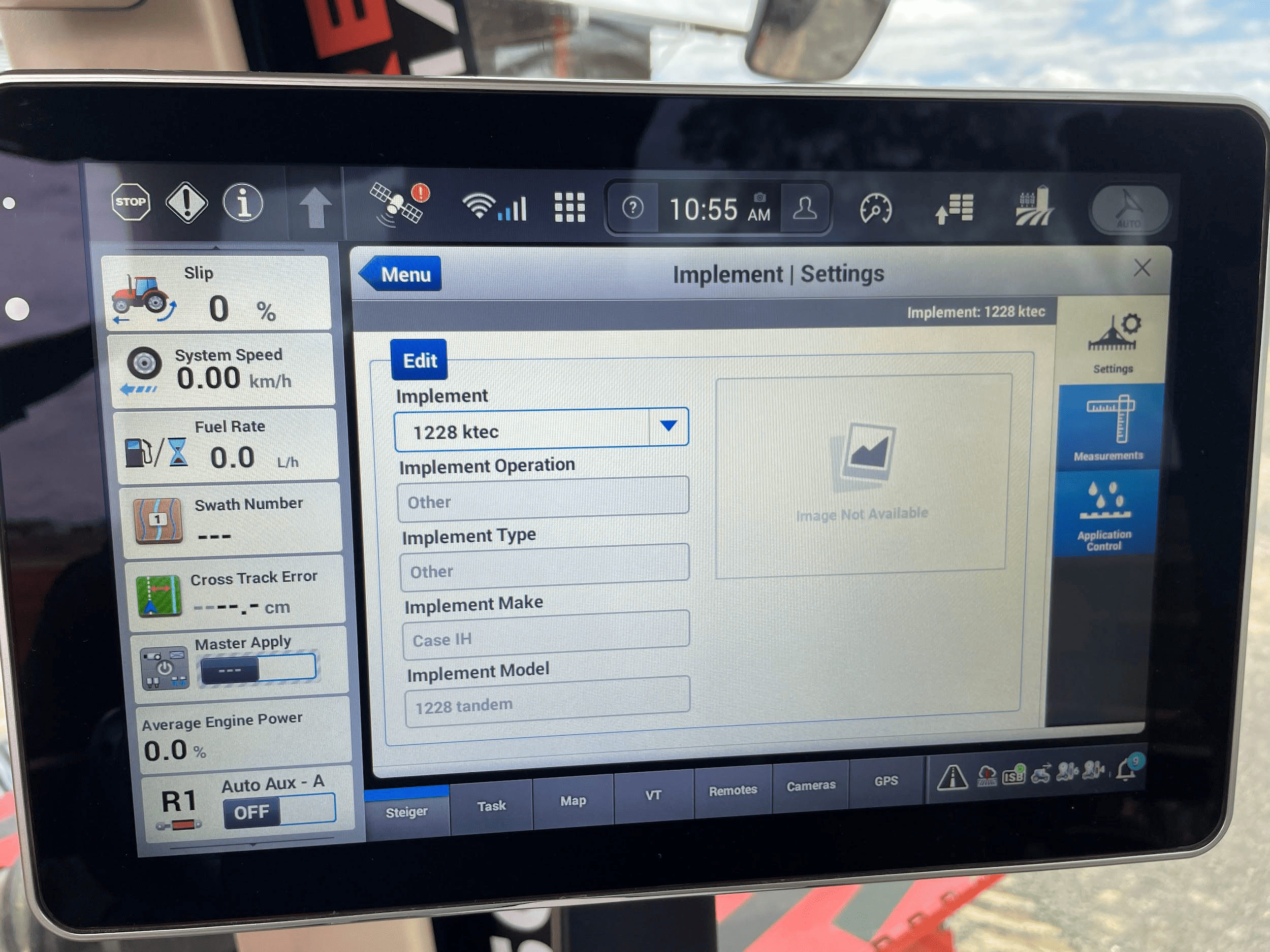
3. Open the “Remotes” settings tab to display remote valve configuration.
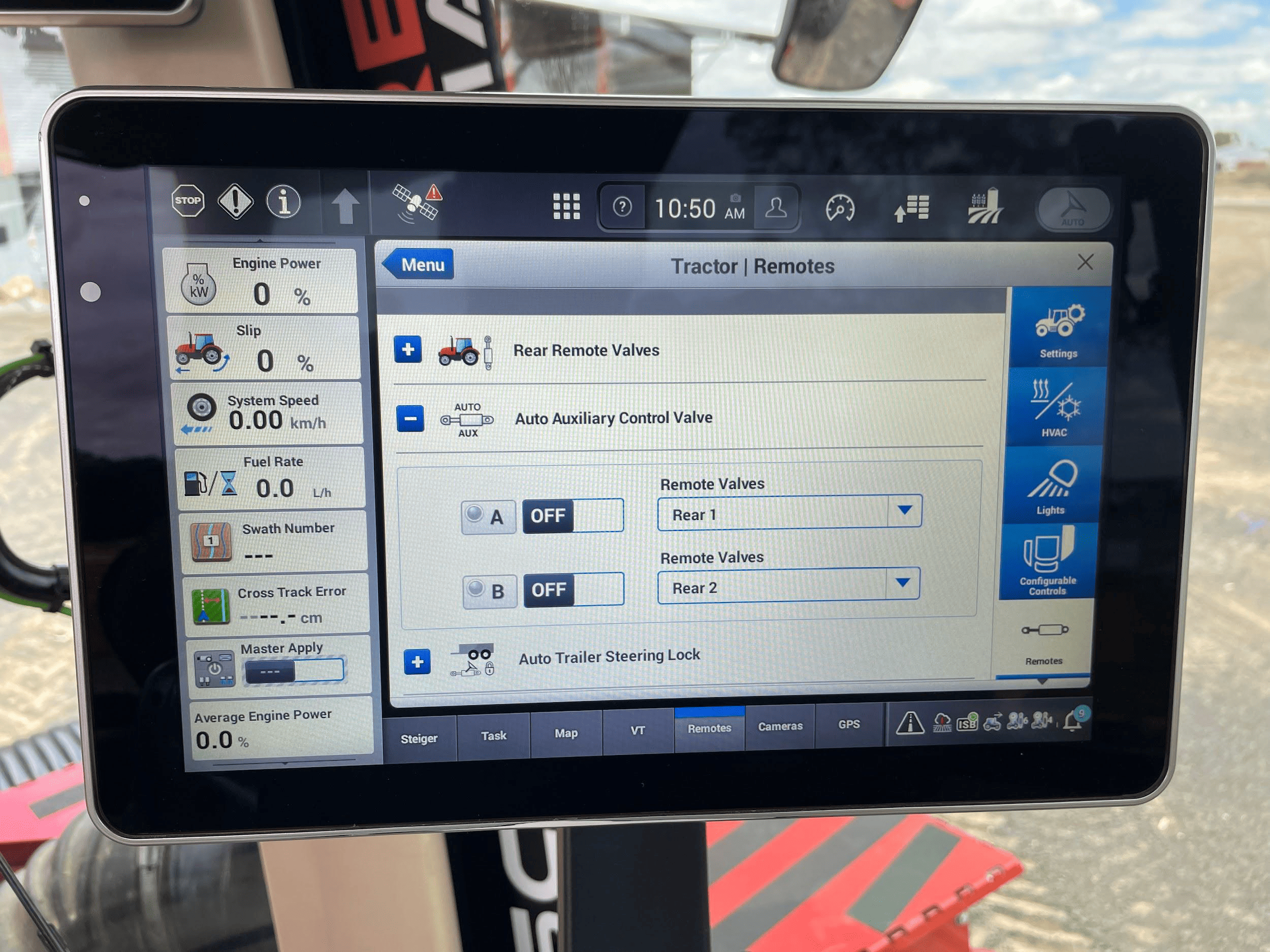
4. Set the desired remote valve outputs at the back of the tractor to the desired function (A or B).
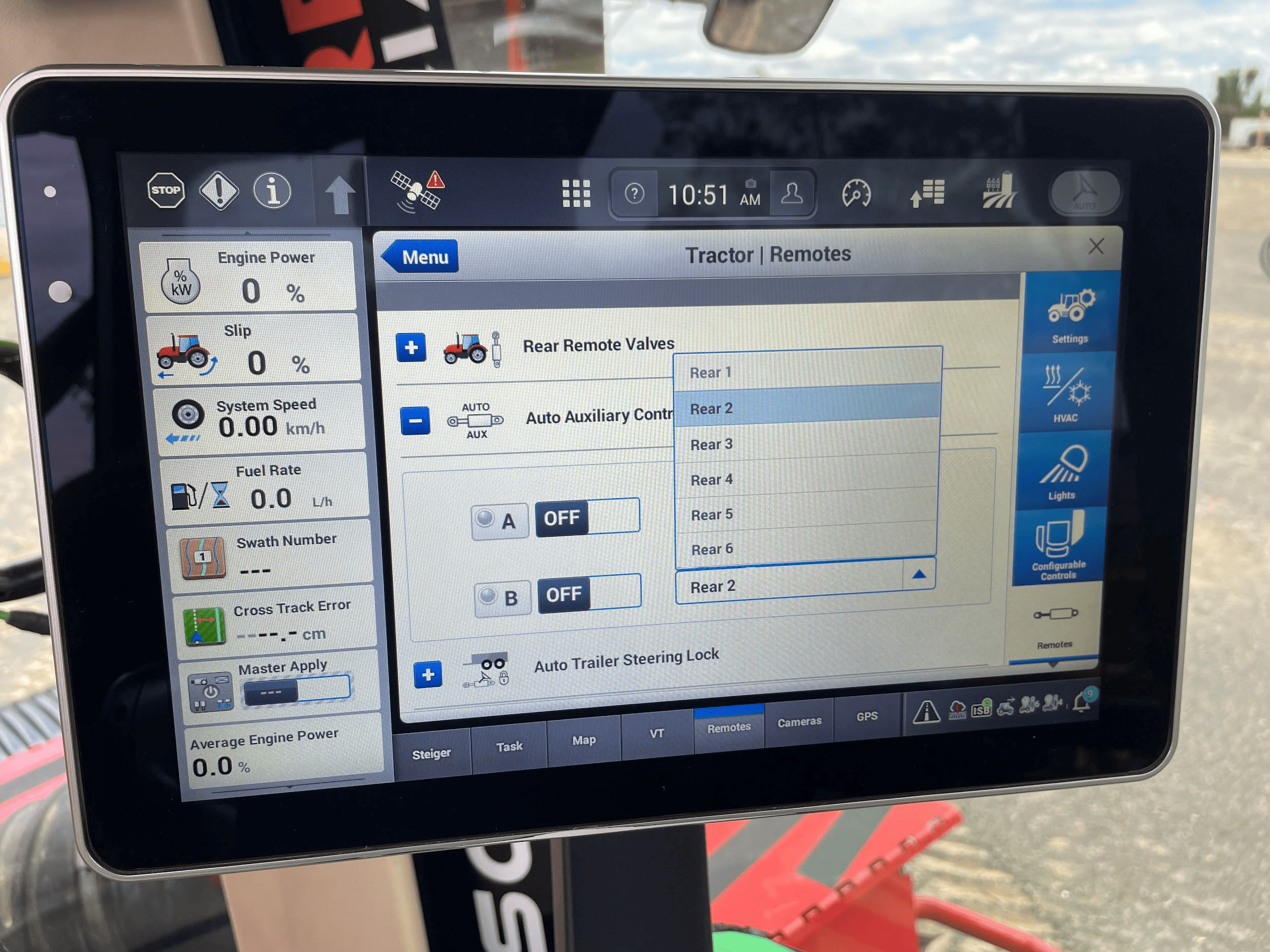
NOTE: The remote valves selected for A and B should be matched to the valve connections at the back of the tractor pictured
below. We recommend setting auxiliary valve A to remote valve “Rear 1”, and setting auxiliary valve B to remote valve “Rear 2”,
which will configure remote valves 1 and 2 at the back of the tractor for use with COMMAND.
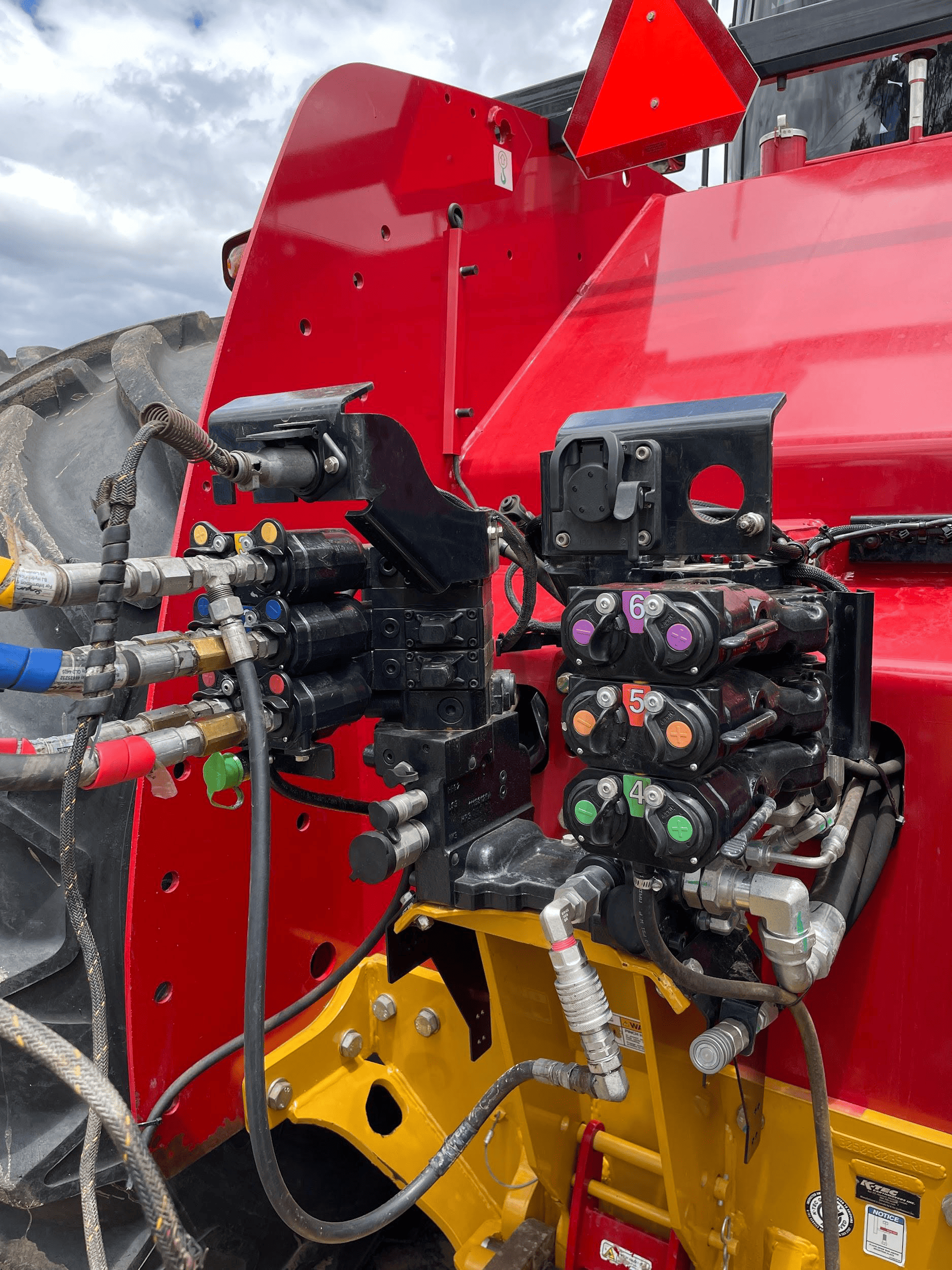
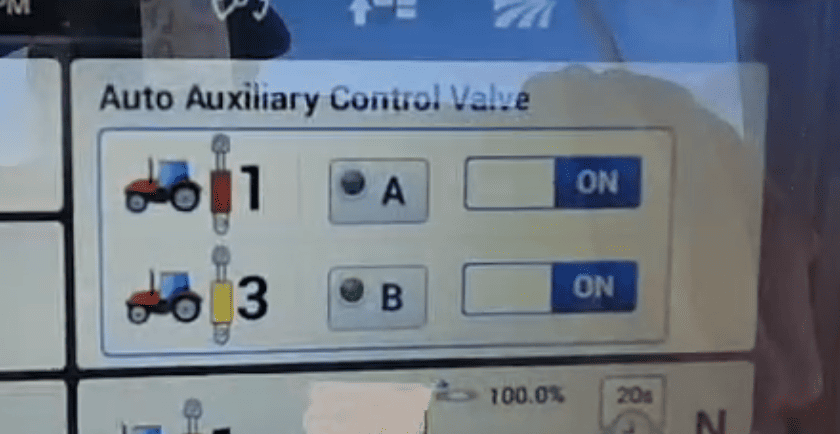
5. Once the remote valves on the tractor have been set to the desired auxiliary function, the machine should now be fully configured and ready for use. In order to engage auxiliary control, the user must ensure that the Auto Auxiliary Control Valves A & B have been turned on in the relevant area on the “Remotes” page.
6. The “Auto Auxiliary Control Valve” can be accessed either by the hydraulic cylinder shortcut next to the display navigation dial on the armrest, or by adding the menu to the display home page. Once this menu is accessed, turn either or both required function to the on position and briefly push the selected remote valve lever forward until it clicks, then release it. The lever returns to its resting position.
Operation Notes
COMMAND interfaces with the Case / New Holland tractor valves by sending analog signals to the integrated valve controller, commanding either port A or port B flow of two of the rear tractor SCVs (For AFS Connect models any SCV can be linked to either of the two analog inputs).
To operate the SCVs in automatic control mode, the user first needs to arm one or both of the configured auto SCVs by toggling the Auto Auxiliary Control Valve toggles to ON.
Then, either push the respective SCV lever forward into the detent position or press the respective SCV button in front of the levers. This will cause the A and/or B LEDs on the pro 1200 screen to change to solid green, indicating the valves are active for automatic control.
Levers can be moved manually, which will override automatic control and once let go, automatic control will resume. To disable automatic control, pull or push the respective SCV lever until it clicks. The A or B LED on the pro 1200 screen should now begin flashing, meaning that automatic control is paused until the operator resumes by pushing the lever to detent or pressing the SCV button again.
IMPORTANT: Moving the SCV lever alone will NOT disengage AUTO mode in modern case tractors, so movements based on any current valve signals will continue. Always keep this in mind during operation.
For more information on configuring COMMAND for use with Case / New Holland auxiliary rear valve control inputs, please refer to the Level COMMAND Manual.